Description
(Cymbopogon flexuosus)
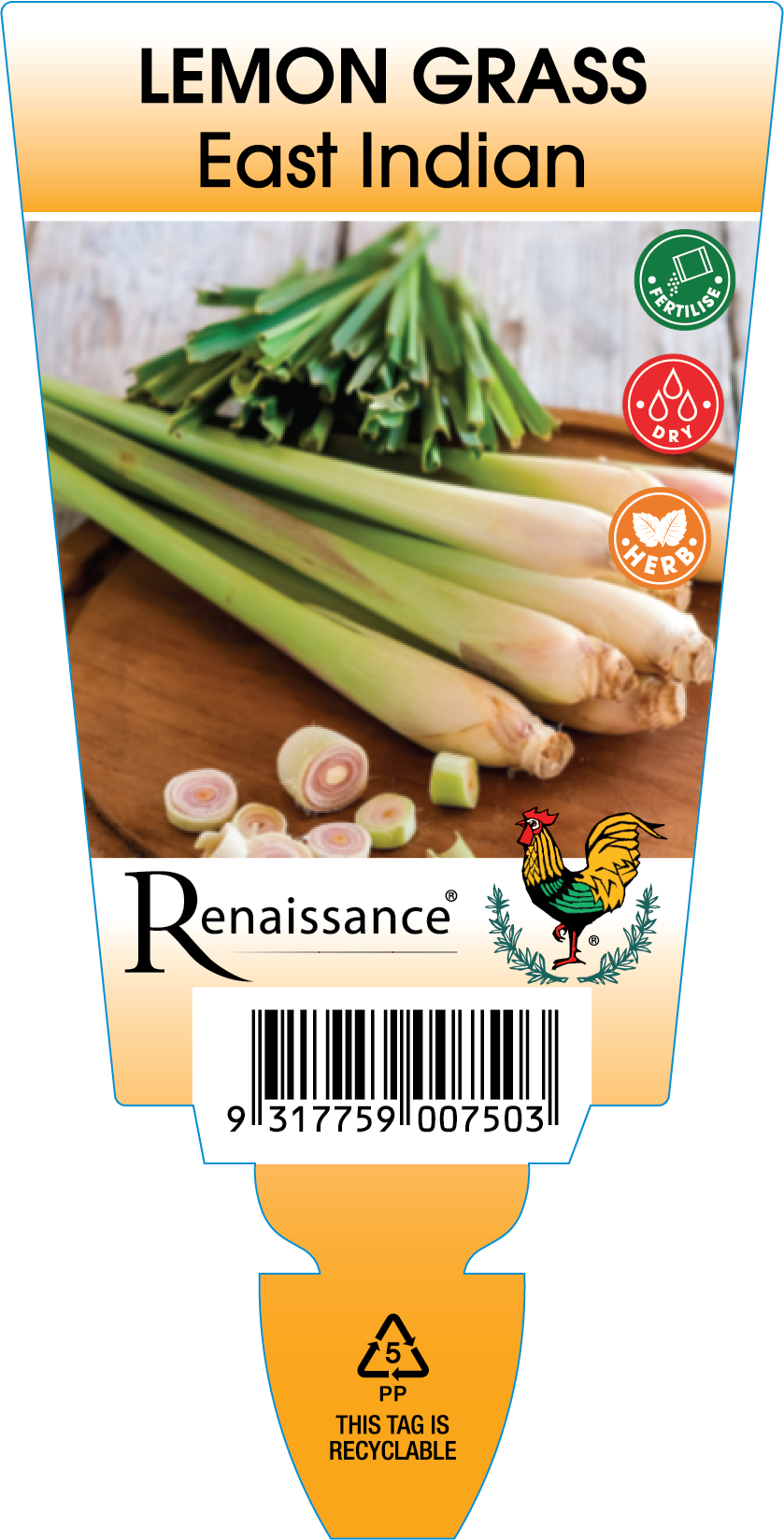
A high/ypopular grass herb with a very strong lemon flavour. The East/ndian variety bears leaves that are bright green and have very sharp corners with purple tinges in the stems.
Flavours/Food Partners:
Chives, basil, mint, chilli, thyme, garlic and coriander. Like West Indian Lemon Grass this herb adds a piquant lemon zing to salad vegetables, soups, marinades, Asian dishes and seafood. It is more widely used for herbal teas and natural soft drinks than for cooking.
Health/Cooking/Medicinal:
An easy-to-use herb that enhances other herbs and can be added at any time during cooking. Remove the tough outer layers and finely slice the softer white flesh or soak the young leaves in boiling water for that characteristic lemon flavour.
Landscaping/Planting:
This large weeping grass will grow in most soil types and prefers a full sun position. It needs regular moisture prior to being established; then it is fairly drought-tolerant. Needs to be protected from the severe cold in the cooler regions.
Cultivation/Fertiliser:
Harvest as needed and give regular applications of Seasol and PowerFeed to keep it producing and growing well.
Herb Attributes
| Harvest | To use fresh lemongrass in your cooking, always cut off the lower bulb and remove tough, outer leaves. The main stalk (the yellow section) is what is used in Thai cooking, although I always reserve the upper green “stem” and add this to my soups and curries for extra flavor. |
|---|---|
| Position | Full to Part Sun |
| Height | 1.5m |
| Width | 75cm |
| Lifespan | Perennial. Depending on the area you live in the plant will go dormant in the winter. In harsh climates the plant will need to be potted and wintered indoors. |